Why full disclosure matters
The dietary supplement industry is dominated by proprietary blends — a single label entry listing a combined weight for multiple ingredients without disclosing how much of each compound is actually present. This practice makes it impossible to verify whether any ingredient is at a dose comparable to the clinical trial amounts that produced measurable effects, or whether it is at a token quantity included only for label marketing.
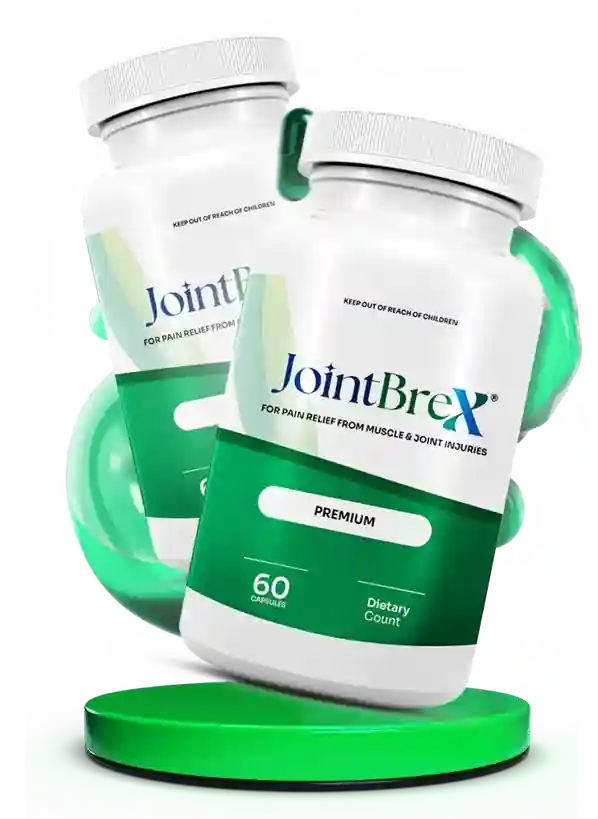
Jointbrex discloses all six ingredients with their individual amounts. This allows every compound to be compared against published research. It also means the allergen (crustacean shellfish in Glucosamine) and interaction risks (anticoagulants with Bromelain and Turmeric) are transparently visible before purchase. Transparency is a precondition for evaluability — and Jointbrex meets it.
Glucosamine Sulfate
Glucosamine is an amino sugar serving as the primary substrate for proteoglycan synthesis in articular cartilage. Proteoglycans are the macromolecular structures giving cartilage its load-bearing matrix. Without adequate glucosamine supply, cartilage matrix cannot be effectively maintained or repaired. Jointbrex uses the sulfate salt form, which has consistently outperformed the hydrochloride form in head-to-head comparisons and has the stronger evidence base from major trials. Allergen disclosure: Glucosamine Sulfate in Jointbrex is derived from crustacean shellfish.
Chondroitin Sulfate
Chondroitin is a glycosaminoglycan — a long repeating chain carrying a high negative charge that attracts and retains water within the cartilage matrix. This retained water provides the hydrostatic pressure giving cartilage its compressive stiffness and elasticity. Without chondroitin, cartilage desiccates even if the proteoglycan scaffold remains intact. Clinical trials consistently show the Glucosamine-Chondroitin combination outperforms either compound alone for clinically meaningful pain reduction. The LEGS trial demonstrated reduced cartilage volume loss on MRI at two years — direct evidence of structural benefit from this combination.
Full ingredient disclosure and current pricing on the official Jointbrex site.
🧖 View JointbrexBoswellia and Turmeric in detail
Boswellia serrata inhibits 5-lipoxygenase enzymes, preventing leukotriene-B4 production — a key inflammatory mediator in chronic joint conditions. Unlike NSAIDs, it leaves the COX pathway intact, avoiding GI side effects. The mechanism is well-characterised and genuinely different from NSAID action — making Boswellia a complementary, non-redundant addition to any anti-inflammatory protocol.
Curcumin (Turmeric) targets NF-kB — the master transcription factor controlling expression of TNF-alpha, IL-1beta, and IL-6. These cytokines produce the daily aching and morning stiffness characteristic of chronic inflammatory joint conditions. By reducing NF-kB nuclear translocation, curcumin cuts the upstream cytokine cascade that the downstream symptoms arise from. Important: Both Boswellia and Turmeric should be discussed with a healthcare provider if you take anticoagulant medications.
MSM and Bromelain in detail
MSM (methylsulfonylmethane) supplies organic sulfur — a structural element in the disulfide bonds of collagen. Collagen is the primary protein in tendons, ligaments, the joint capsule, and articular cartilage itself. Without consistent sulfur availability, the connective tissue architecture surrounding joints weakens progressively. MSM's sulfur supply role is genuinely distinct from all five other Jointbrex compounds, which do not address connective tissue sulfur supply. Published trials show significant pain reduction and improved function over 12 weeks, with additive effects alongside Glucosamine.
Bromelain is a cysteine protease from pineapple stem. Its action is mechanistically unique among the six Jointbrex compounds: it degrades fibrin, kinins, and immune complexes that accumulate as solid inflammatory protein deposits in swollen joint tissue. This reduces pressure, improves local microcirculation, and accelerates inflammatory metabolite clearance — effects that receptor-pathway anti-inflammatories cannot produce.
Keep reading
More on the Jointbrex blog. Official site for pricing.